Categories
Latest Posts


Tags
Advertising Amazon Amazon Advertising Amazon Experts Amazon Listing Optimization Amazon Marketplace Amazon News Amazon Prime Amazon Professional Sellers Summit Amazon Seller amazon sellers Amazon Seller Tips Amazon Seller Tools ASIN Brand Management Brands Buy Box Campaign Manager Consumer Trends COVID-19 downloadable Dynamic Pricing Ecommerce FBA FBM Holiday Season industry news Multi-Channel Fulfillment Optimize pay-per-click Pricing Algorithm Pricing Software Private Label Profits Repricing Repricing Software Revenue Sales Seller Seller-Fulfilled Prime Seller Performance Metrics SEO SKU Sponsored Products Ads Strategy
Get the latest insights right in your inbox
Resource | Blog
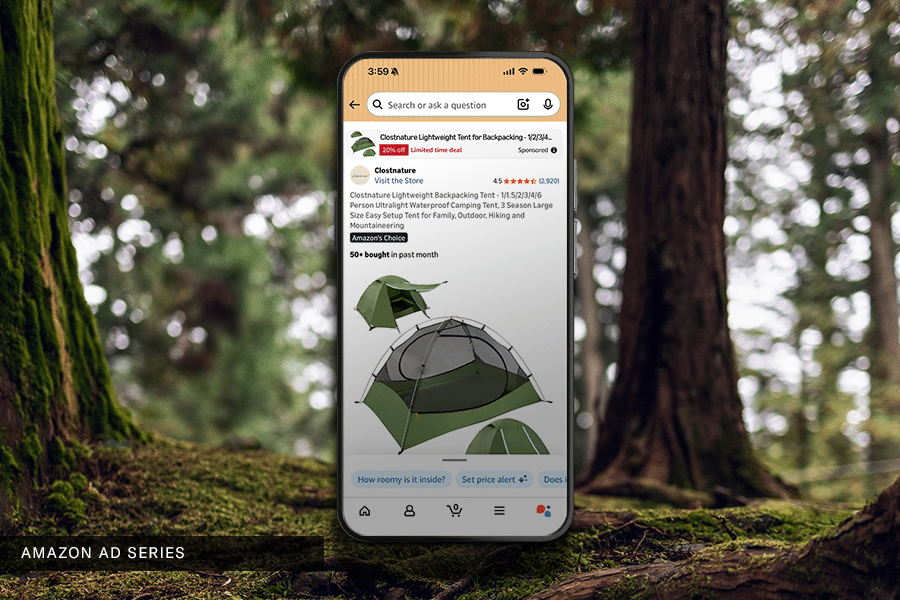
Amazon Ads | This blog is part of our Amazon Ad series where we dive deep into each ad type.
How to Optimize Amazon Sponsored Products Ads in 2026
- April 23, 2026
- By: Dani Nadel, President and COO

Dani Nadel
Dani is the President and Chief Operating Officer at Feedvisor. She is a recognized marketing and digital expert with more than 20 years of hands-on experience managing nationally recognized consumer and corporate brands.
TL;DR: Amazon Sponsored Products optimization in 2026 is no longer a campaign management discipline. It is a system-level practice that integrates demand, pricing, inventory, and audience signals alongside advertising to drive profitable growth. This guide outlines the 10-step framework that high-growth brands and vendors are using to scale Sponsored Products profitably in an increasingly competitive environment.
Who This Guide is For: Brand managers, marketing directors, and executives at brands selling on Amazon as third-party sellers (3P) or first-party vendors (1P) who need to scale Sponsored Products profitably in an increasingly competitive and margin-compressed environment.
What Are Amazon Sponsored Products?
Amazon Sponsored Products are a cost-per-click (CPC) advertising format that promotes individual product listings within Amazon search results and on product detail pages. It is the primary demand capture engine within the broader Amazon advertising system, alongside Sponsored Brands, Sponsored Display, DSP, and AMC. While each plays a distinct role in driving growth, efficiency, and incrementality, Amazon Sponsored Products remain the highest-converting and most scalable advertising format on Amazon.
As the format has evolved beyond keyword targeting to incorporate audience signals and remarketing capabilities that target high-intent demand with greater precision, it has become the primary economic engine for Amazon growth. But for many brands, performance is becoming harder to sustain.
Why Advertising Performance Is Harder to Sustain in 2026
In 2026, optimizing Sponsored Products requires far more than bid adjustments and keyword expansion alone. Sponsored Products now operate within an environment defined by sustained CPC inflation, compressed margins, algorithmic competition, and heightened executive scrutiny on retail media ROI.
These conditions reflect a fundamental shift in the economics of Amazon advertising. According to the Feedvisor 2026 Amazon Advertising Report, nearly eight in ten brands reported year-over-year CPC increases, with nearly half experiencing double-digit inflation. Sponsored Products now operate within an environment defined by sustained CPC inflation, compressed margins, algorithmic competition, and heightened executive scrutiny. Put simply, optimizing within campaigns is no longer sufficient, extending well beyond keyword and bid management to include real-time alignment with commercial performance drivers. Amazon Sponsored Products optimization in 2026 means managing campaigns within a unified system that integrates demand, audience, pricing, and inventory signals, with profitability constraints simultaneously.
This guide outlines the Feedvisor 2026 Sponsored Products Optimization Model, the operating framework used by high-growth and leading brands and vendors to scale profitably in competitive categories.
What Is the Best Way to Optimize Amazon Sponsored Products in 2026?
The most effective approach is to move from campaign-level optimization to system-level optimization.
This means:
- Anchoring decisions in profitability, not ACoS
- Structuring campaigns by intent and business objective
- Continuously refining keyword and targeting strategy
- Aligning advertising with pricing, inventory, and demand signals
- Managing budgets dynamically based on performance and traffic patterns
Brands that follow this model build predictable, scalable growth systems.
Step 1: Start With Profitability, Not ACoS
In 2026, ACOS (Advertising Cost of Sale) is a directional metric, not a decision metric. It should inform analysis, not dictate investment decisions. Optimizing to ACOS alone often leads to suppressed growth or hidden margin erosion.
This is particularly true for Amazon Sponsored Product programs operating in inflationary bidding environments. Amazon advertising performance should be evaluated at the contribution margin level, not campaign-level efficiency alone, to ensure it drives profitable growth, not just efficient spend. Optimization should anchor to:
- Contribution margin after Amazon fees
- TACOS (Total Advertising Cost of Sale), the total ad spend as a percentage of total revenue including organic sales
- Blended ROAS across the full portfolio of Sponsored Products, Sponsored Brands, Sponsored Display, and DSP
- Inventory velocity impact
- Category share of voice
Optimizing against a static ACoS target in a rising CPC environment either suppresses growth or accelerates margin erosion.
Before adjusting bids, calculate your margin ceiling:
Target ROAS = (Revenue – COGS – Amazon Fees – Fulfillment – Shipping) / Acceptable Ad Spend
This becomes your primary bidding guardrail. Without a defined profitability threshold, scale becomes unpredictable and margin erosion accelerates.
Achieving this level of margin precision requires continuous, unified visibility across operational, brand, and demand signals, including inventory depth, return rates, fulfillment costs, search trends, alongside competitive data. At scale, this guardrail must be automated and updated dynamically rather than recalculated manually on a periodic basis.
Note for 1P vendors: The margin ceiling calculation differs for first-party vendors, where Amazon controls retail pricing and the cost of goods is expressed as a wholesale cost. Vendors should anchor optimization to net PPM (pure profit margin) and work with their finance teams to establish an ad spend threshold that reflects true contribution after chargebacks, co-op, and freight.
Step 2: Segment Campaigns by Business Objective
Campaign segmentation means organizing your Sponsored Products campaigns by distinct business objectives and shopper intent, rather than grouping all keywords and products together. Mixed-intent structures dilute performance signals and reduce optimization precision. They also create internal competition that obscures true performance. Effective segmentation begins with deep keyword and targeting research to understand true shopper intent across branded, generic, and competitive queries. High-performing accounts separate Sponsored Products into defined intent layers:
- Branded terms
- Category (non-branded) high-intent
- Long-tail discovery
- Competitor conquesting
- Defensive ASIN targeting
Each layer should operate with distinct budget allocation, separate performance benchmarks, and bid logic aligned to its role in the purchase journey. Ongoing keyword expansion and search term mining are critical. Intent shifts over time, and targeting research must be continuous rather than static.
For example:
- Branded: Maximize impression dominance and protect high-margin traffic
- Category: Capture growth while managing efficiency
- Competitor: Strategic conquesting with higher ACoS tolerance
Clean segmentation improves machine-learning signal clarity, enables more predictable scaling, and prevents internal budget cannibalization and blended signals that make it difficult to identify what is actually driving growth versus inefficiency.
Step 3: Implement Search Term Isolation
As campaigns scale, keyword overlap and internal bid competition become common performance leaks. Search term isolation, the process of migrating high-performing search queries from broad or auto campaigns into dedicated exact match campaigns with independent bid control and budget allocation, ensures high-performing and strategically incremental queries receive intentional budget prioritization and bid control.
Auto and broad campaigns should function primarily as discovery engines, ongoing keyword and targeting research layers, surfacing new search terms and ASIN opportunities that should be migrated into structured campaigns rather than scaled as core revenue drivers.
When high-performing queries remain buried within mixed match types, performance signals blur, internal competition increases, and budget is often allocated based on incomplete or misleading signals.
Effective isolation requires disciplined keyword and competitive research. High-performing advertisers evaluate search terms beyond last-click ROAS.
This ensures the spend prioritizes structurally advantaged, high-impact demand, not simply historical converters.
A structured isolation process typically includes:
- Promoting high-value and incremental terms into exact match campaigns
- Tiering bids based on performance, margin, and incrementality
- Negating migrated terms from discovery campaigns to eliminate overlap
- Applying bid-by-placement modifiers on isolation campaigns for maximum performance control
At scale, this level of keyword research, competitive benchmarking, and incrementality evaluation requires advanced data infrastructure and AI-powered automation. Manual mining rarely surfaces these patterns consistently or at the speed required to compete, creating a persistent gap between available demand and captured demand.
Step 4: Control Placement Multipliers With Data
Placement multipliers are percentage-based bid adjustments that increase your base bid for specific ad placements, such as Top of Search results or Product Detail Pages. Placement strategy frequently delivers more impact than base bid adjustments. Top of Search placements can generate materially higher conversion rates in many categories, but they also command premium CPCs.
Increase Top of Search multipliers only if:
- Placement-level CVR exceeds account average
- Margin thresholds support higher CPC
- Impression share opportunity remains
Avoid Product Page multipliers unless actively conquesting. Do not overlook other placements that may provide efficient bidding opportunities and strong performance.
Because bid multipliers are set at the campaign level, applying them to isolation campaigns grants the advertiser deeper performance visibility and control.
In inflationary CPC environments, placement discipline protects profitability and prevents overexposure on low-yield placements.
Step 5: Integrate Pricing and Advertising Strategy
Amazon Sponsored Products performance is inseparable from your product’s commercial competitiveness. Advertising does not operate independently of price competitiveness, Buy Box stability, or inventory depth. It amplifies underlying commercial strength. Key drivers include:
- Price index versus top competitors
- Promotional timing
- Buy Box stability and protection against unauthorized sellers, pricing gaps, and inventory disruption
- Inventory depth
When price competitiveness weakens, conversion rates decline, CPC rises as relevance scores fall, and ROAS deteriorates. This is not an advertising problem. It is a commercial competitiveness problem. At that point, bid optimization cannot recover performance.
But the inverse is equally powerful. When pricing advantage exists, conversion rates improve, impression share expands, and more aggressive bidding is justified.
High-performing advertisers align advertising intensity with commercial strength. This includes:
- Adjusting bids based on real-time price competitiveness
- Increasing spend when promotional or pricing advantages improve conversion probability
- Inventory-aware budget throttling
- Concentrating spend aggressively during high-demand surges
Advertising optimization without pricing awareness leads to false performance signals and reactive bid adjustments that misallocate spend, either overinvesting in non-competitive products or underfunding high-potential SKUs.
This is one of the most common sources of wasted spend in Amazon advertising programs.
When pricing and advertising operate in sync, Sponsored Products becomes a predictable, margin-aware growth engine rather than a reactive spend lever. This integration is only achievable at scale when pricing signals and advertising decisions share the same data layer.
Note for vendors (1P): Because vendors do not control retail pricing directly, Amazon’s retail price and Buy Box dynamics become a critical variable in advertising performance. Vendors should focus on controllable levers of retail competitiveness: promotional funding and Deal participation, inventory health to avoid out-of-stock suppression, and pricing anomalies outside a competitive range. Advertising should be throttled when price competitiveness weakens, as spend against an uncompetitive listing will erode efficiency regardless of bid optimization.
Step 6: Optimize Budget Allocation Based on Demand Intensity
Flat daily budgets are one of the most common sources of misallocated spend in Amazon advertising. Traffic volatility has intensified, particularly around retail events and peak shopping windows, and intraday and day-of-week performance can vary materially. Dynamic budget allocation, distributing spend across campaigns and time windows based on real-time performance signals, is how advanced advertisers respond. They operate budgets as a dynamic investment lever, not a static constraint:
- Analyze intraday and day-of-week conversion and basket size patterns
- Prevent early budget exhaustion that suppresses high-intent traffic late in the day
- Allocate spend toward consistently high-conversion windows
- Adjust budgets dynamically during promotional or event-driven spikes
- Reallocate budget in real time across campaigns based on performance velocity and ROI
This improves blended ROAS and stabilizes performance by aligning spend with demand intensity rather than arbitrary time-based assumptions.
Static daily caps limit scale during high-return periods and overspend during low-efficiency windows. Budgets must flex with performance signals, not calendar timing.
Step 7: Layer Audience Signals Strategically
Audience signals are behavioral and demographic data points, such as past purchase history, in-market browsing behavior, and lifetime value cohorts, that Amazon makes available for bid adjustments within Sponsored Products campaigns. While keyword intent remains primary, layering audience signals improves precision and conversion quality. Strategic layering includes:
- Increasing bids for repeat purchasers and high-LTV cohorts
- Prioritizing in-market behavioral segments aligned to category intent
- Leveraging Sponsored Products remarketing audiences to reinforce consideration
Audience prioritization improves conversion quality without risking broad CPC inflation and helps concentrate spend on higher lifetime value buyers instead of treating all traffic equally.
Both sellers and vendors can activate Amazon Marketing Cloud audience segments to inform Sponsored Products bid adjustments for behavioral audiences, using AMC-derived insights on purchase overlap, path to purchase, and high-LTV cohorts.
Step 8: Monitor CPC and Competitive Pressure Weekly
In 2026, CPC pressure reflects long-term competitive dynamics rather than short-term swings. Monitor the following trends closely: CPC movement by match type, impression share shifts, and seasonal demand patterns
What to Investigate When CPC Rises Without CVR Lift:
If CPC rises without corresponding Conversion rate lift, investigate the following:
- Listing quality and relevance to the targeted keyword
- Pricing competitiveness
- Creative differentiation
- Budget reallocation toward higher-performing targets
Optimization requires market awareness beyond campaign dashboards and a proactive response to competitive shifts. Marketplace signals, including competitor bid intensity, new entrant activity, and category CPM trends, are early warning indicators that should be monitored at the platform level rather than inferred from lagging campaign metrics alone.
Step 9: Improve Conversion Rate Through Listing Optimization
Listing optimization means improving your product detail page elements, including images, titles, A+ content, reviews, and promotional badges, to maximize the conversion rate of traffic driven by advertising. Sponsored Products amplifies listing quality. It does not compensate for weaknesses. Conversion drivers include:
- Primary image differentiation
- Benefit-led, keyword-aligned titles
- Robust A+ content
- Review volume and rating stability
- Promotional visibility
Even modest CVR improvement can offset significant CPC increases. Advertising optimization must include listing optimization as a core performance lever, not an afterthought. Without this, efficiency gains from campaign optimization are structurally limited.
For Vendors, an additional complexity applies: Amazon retains editorial control over detail pages in many cases, so content updates must be submitted through Vendor Central and A+ content approvals should be prioritized proactively due to longer lead times. Listing suppression issues that undermine ad performance should be escalated promptly. For brand-registered sellers (3P), control is significantly higher, allowing for faster iteration across content, pricing, and advertising. However, listing integrity, Buy Box ownership, and catalog conflicts can still impact performance, and should be actively monitored.
Step 10: Align Sponsored Products Within a Comprehensive Amazon Commerce Strategy
Sponsored Products does not operate in isolation. It performs best when coordinated with Sponsored Brands, Sponsored Display, and DSP, and when advertising decisions are connected to the pricing, promotional, and inventory signals that determine whether spend actually converts. High-performing programs coordinate Sponsored Products with other media and commercial levers:
- Use DSP prospecting to expand new-to-brand demand that Sponsored Products later captures
- Deploy DSP retargeting to convert non-purchasers and improve blended efficiency
- Protect branded search with both Sponsored Products and Sponsored Brands to prevent competitor capture
- Reallocate spend based on incrementality insights, especially when branded Sponsored Products overlap with organic demand
- Increase Sponsored Products investment during pricing or promotional advantages
- Throttle Sponsored Products intensity when inventory tightens
- Evaluate performance at the portfolio level, not in isolation
Strong Sponsored Products programs are not just optimized. They are strategically orchestrated within a broader demand architecture designed to balance growth, efficiency, and incrementality.
At scale, this level of coordination across pricing, inventory, advertising, and competitive monitoring is not operationally sustainable without a unified platform that connects these signals automatically, whether through a self-managed SaaS model or a fully managed service where expert strategists operate the system on their behalf.
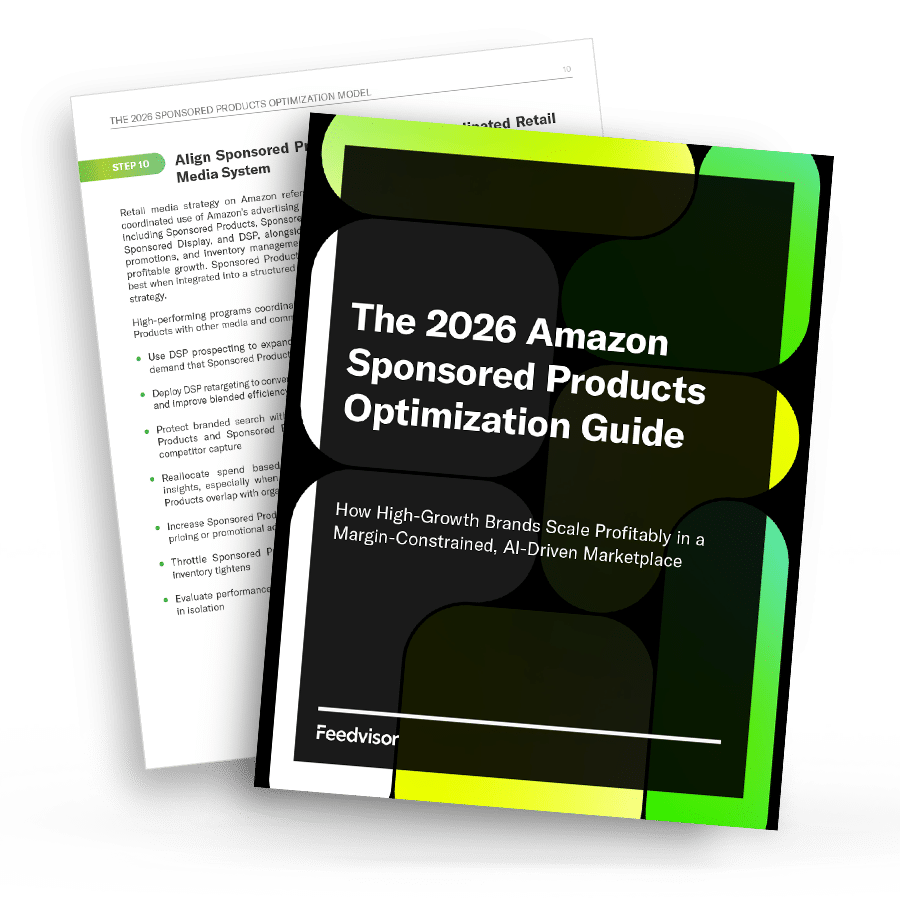
Download Your Copy of the 2026 Sponsored Product Ad Guide
Final Takeaway
In 2026, optimizing Amazon Sponsored Products is no longer about bid management alone. It demands coordinated control across margin, intent, placement, pricing, audience, inventory signals, ongoing keyword and targeting research, and dynamic budget allocation. At scale, managing these interdependent variables manually is neither efficient nor sustainable.
Precision now depends on technology and AI-driven systems capable of processing real-time marketplace signals and adapting dynamically. We call this Intelligent Commerce, and it requires a disciplined approach built on:
- Profit-first modeling
- Intent-based campaign architecture
- Precise targeting isolation on selective, high-opportunity keywords
- Data-driven placement control
- Pricing and inventory alignment
- Audience prioritization
- Continuous keyword and targeting refinement
- Portfolio-level measurement
Bidding smarter and operating Sponsored Products as a disciplined, integrated component of an intelligent retail media system is the winning formula for 2026 and beyond.
FAQs for Sponsored Product Optimization
What is the Difference Between ACOS and TACOS?
ACOS measures advertising efficiency at the campaign level, while TACOS reflects total revenue impact, including organic sales.
TACOS provides a more complete view of how advertising contributes to overall business performance, not just paid efficiency.
What is a Good ACOS Benchmark?
There is no universal ACOS benchmark. It should be set based on contribution margin, not industry averages. Any static target detached from margin will lead to incorrect investment decisions.
What is a Good TACOS Benchmark for Amazon?
There is no universal TACOS benchmark. It varies by category, margin structure, and growth stage.
High-competition categories typically operate at higher TACOS, while brands with strong organic rank can sustain lower levels. Early-stage or private label brands often run higher TACOS to build organic velocity, which is expected.
The most reliable benchmark is your own historical trend line. Track directional improvement over time rather than optimizing to an external number that may not reflect your economics or competitive environment.
How Should Amazon Sponsored Products Campaigns Be Structured?
High-performing programs segment campaigns by shopper intent layer and business objective. This includes isolating high-value keywords into exact match structures, and aligning budgets to margin and incrementality signals.
How Often Should Bids Be Adjusted?
Bids should be evaluated weekly, not adjusted reactively on a daily basis.
Frequent manual changes can create instability in Amazon’s bidding algorithms and degrade performance over time.
Should Auto Campaigns Run Continuously?
Yes, but primarily as discovery engines to harvest search terms and ASIN opportunities, which are then migrated into structured campaigns. They should not absorb the majority of the budget.
How Do You Reduce Amazon Advertising CPC?
There is no single lever to reduce CPC. It is a function of relevance, conversion rate, and competitive pressure. The most effective approach combines:
- Improving listing CVR to strengthen relevance signals
- Refining search term isolation to eliminate low-quality traffic
- Adjusting placement multipliers to reduce spend on low-yield positions
- Aligning pricing strategy to improve conversion probability
- Prioritizing incremental, high-intent demand sources over broad discovery
What Is Incrementality and Why Does It Matter For Amazon Advertising?
Incrementality measures whether advertising is driving net-new demand or capturing purchases that would have happened anyway through organic search or direct navigation. A campaign can show strong ROAS while delivering very little incremental value if it is primarily capturing branded shoppers who would have converted regardless. Understanding incrementality allows brands to concentrate budget on terms and campaigns that genuinely expand demand rather than subsidizing existing purchase intent.
How is AI Changing Amazon Sponsored Products Optimization?
AI is shifting Amazon advertising from a reactive, manually managed discipline to a proactive, autonomous one. AI-powered platforms continuously process operational, brand, demand, and marketplace signals to make real-time adjustments at a speed and scale no human team can match. Feedvisor’s AI Advisor surfaces actionable recommendations across bidding, targeting, and budget allocation, while agentic AI executes those decisions autonomously based on predefined performance parameters, so programs adapt dynamically to marketplace conditions rather than lagging behind them.
How Does Amazon Advertising Integrate With Pricing and Inventory Strategy?
Pricing and inventory are the two variables that most directly determine whether advertising spend converts efficiently. When a product is priced uncompetitively, conversion rates fall, relevance signals weaken, and CPC rises. When inventory runs low, ad spend drives traffic to listings that cannot fulfill demand. The most sophisticated programs treat pricing, inventory, and advertising as a single integrated system, automatically adjusting bid intensity as commercial conditions shift. Feedvisor’s AI-powered 360 platform connects all three in a unified data layer, enabling autonomous adjustments that a manually managed program cannot replicate at speed or scale.
What Is Retail Media Strategy On Amazon?
Retail media strategy on Amazon refers to the coordinated use of Amazon’s advertising products, alongside pricing, promotions, and inventory management, to drive profitable growth. Leading brands treat Amazon not as a standalone ad platform but as an integrated retail media system where advertising amplifies commercial strength.
What is the Difference Between Amazon Sponsored Products and Sponsored Brands?
Sponsored Products promotes individual product listings and appears within search results and on product detail pages. Sponsored Brands promotes your brand with a custom headline, logo, and multiple products, appearing primarily at the top of search results. Sponsored Products is best suited for demand capture, while Sponsored Brands is designed for brand awareness and consideration. For a complete guide to Sponsored Brands optimization, see Part 2 of this series.
How Do You Measure Amazon Advertising ROI?
Amazon advertising ROI should be measured at the contribution margin level, not ACOS alone. This means evaluating ad spend against the revenue remaining after COGS, Amazon fees, fulfillment, and shipping. TACOS provides a more complete view by including organic revenue in the calculation. The most sophisticated programs also evaluate incrementality to determine whether advertising is driving net-new demand or subsidizing existing purchase intent.