Categories
Latest Posts


Tags
Advertising Amazon Amazon Advertising Amazon Experts Amazon Listing Optimization Amazon Marketplace Amazon News Amazon Prime Amazon Professional Sellers Summit Amazon Seller amazon sellers Amazon Seller Tips Amazon Seller Tools ASIN Brand Management Brands Buy Box Campaign Manager Consumer Trends COVID-19 downloadable Dynamic Pricing Ecommerce FBA FBM Holiday Season industry news Multi-Channel Fulfillment Optimize pay-per-click Pricing Algorithm Pricing Software Private Label Profits Repricing Repricing Software Revenue Sales Seller Seller-Fulfilled Prime Seller Performance Metrics SEO SKU Sponsored Products Ads Strategy
Get the latest insights right in your inbox
Resource | Blog
Updated on: March 03, 2026

Rachel Horner
Rachel Horner serves as a Content Marketing Writer for Feedvisor. She has extensive experience in writing for diverse B2B brands, particularly in the tech industry, and is dedicated to fostering meaningful brand-audience connections.
No More Price Matching: What Target’s Exit Means for E-Commerce Pricing Strategy
Table of Contents
- Why Target Walked Away
- The Numbers Behind the Decision
- You Can’t Price-Match a Moving Target
- Who Still Price Matches - and Why
- What This Means for Sellers and Brands
- FAQ
- Final Thoughts
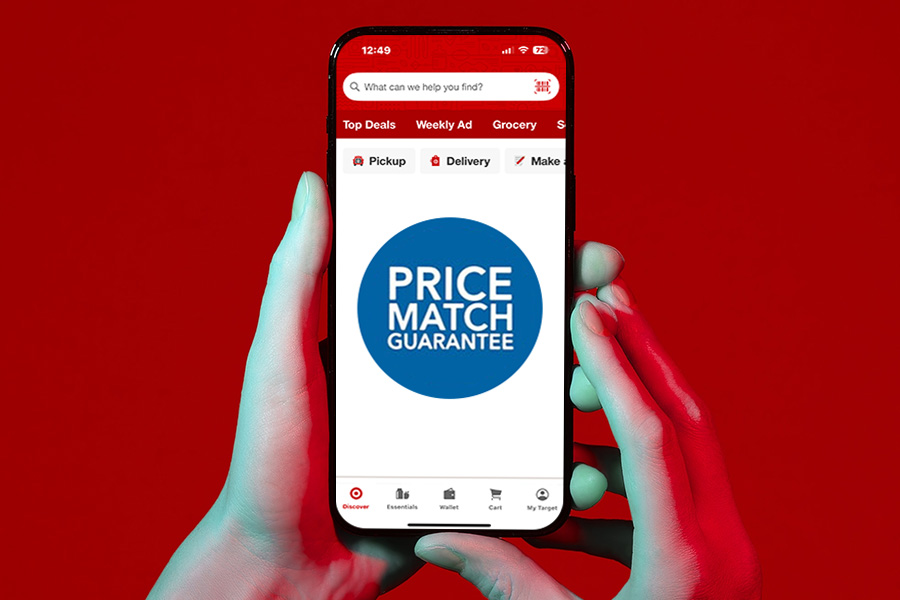
Target killed its competitor price matching policy on July 28, 2025, ending a 12-year practice of matching Amazon and Walmart prices within 14 days of purchase. The move was quiet - announced via internal memo, confirmed by CBS News and ABC News just days before it took effect.
The timing was not accidental. Target’s Q1 2025 sales had already fallen 2.8% year-over-year, adjusted EPS dropped from $2.03 to $1.30, and the company slashed its full-year guidance. Price matching wasn’t a loyalty tool anymore - it was a margin leak.
Here’s what you need to know about what this shift signals for the broader e-commerce pricing landscape, and why it matters for anyone selling on Amazon or Walmart.
Why Target Walked Away
Target’s official explanation was almost too honest: the company said “guests overwhelmingly price match Target and not other retailers.” The program wasn’t driving competitive wins against Amazon or Walmart. It was mostly subsidizing customers who’d already bought at Target and spotted a lower Target price within 14 days.
That revelation tells you everything about why price matching is dying in general merchandise. The policy assumes a static pricing world - one where a shopper sees a competitor’s lower price in a newspaper ad and drives back for an adjustment. That world no longer exists.
Walmart reached the same conclusion when it shut down the Savings Catcher program in May 2019, its automated price comparison tool. Walmart’s reasoning was nearly identical: prices were already low enough to make the program unnecessary. Amazon, notably, never offered formal price matching - it didn’t need to. Its algorithm handles that in real time, repricing millions of products daily without any human intervention.
The Numbers Behind the Decision
Target’s financial position made price matching indefensible. By mid-2025, TGT stock had fallen roughly 30% year-to-date, underperforming both the S&P 500 and the retail index. Operating margins hovered around 4.7-4.9% - thin enough that every basis point counts.
Then tariffs hit. According to CNBC, citing DataWeave research, Amazon’s prices rose 12.8% in 2025 due to tariff pass-through from third-party sellers. Target’s rose 5.5%, and Walmart’s 5.3%. The gap matters: Amazon’s pricing is driven by millions of independent sellers who absorb tariff costs differently than a centralized retail operation.
Price matching Amazon in that environment means matching a price that fluctuates wildly based on cost structures you don’t control. It is, quite literally, chasing a moving target.
You Can’t Price-Match a Moving Target
Amazon changes prices approximately 2.5 million times per day, with adjustments happening roughly every 10 minutes. A single product’s price can swing up to 20% multiple times in one day. No 14-day price match window can keep pace with that.
The dynamic pricing software market has grown to $3.49 billion, expanding at 14.4% annually, because the industry has collectively recognized that static guarantees are obsolete. Industry research from Minderest puts dynamic pricing adoption at roughly 61% among European retailers surveyed - though fewer than 15% deploy genuine AI-powered algorithmic pricing. The gap between having a repricing tool and having an effective one is where the competitive advantage actually sits.
Amazon’s own approach illustrates why. Its algorithm factors in demand, inventory, seller performance, shipping speed, and customer behavior in real time. When Amazon’s Fair Pricing Policy flags a seller’s price as too high, the consequence is Buy Box suppression - effectively making the product invisible. That enforcement mechanism doesn’t exist in a price-match-guarantee world.
The irony is that even Amazon is moving beyond pure price competition. Its November 2025 Buy Box algorithm update introduced a “tolerance band” approach where slightly higher-priced offers from higher-quality sellers can win the Buy Box. Price still matters, but it’s no longer the only variable.
Who Still Price Matches - and Why
The list of major retailers still matching competitor prices is short. Best Buy is the outlier, matching a long list of rivals - Amazon, Walmart, Costco, and over a dozen others. Home Depot and Lowe’s both match competitor prices plus an additional 10% off the difference.
The pattern: retailers that still price match sell durable, high-consideration goods. A $1,200 refrigerator invites comparison shopping. A $12 candle does not. For Target - where 59% of shoppers spend between $51 and $200 per visit, according to our consumer behavior data - the math doesn’t support matching Amazon on thousands of mid-range SKUs.
What This Means for Sellers and Brands
Target’s exit from price matching isn’t just a Target story. It signals how retail competition is evolving - and it has direct implications for brands and sellers on Amazon.
When retailers like Target stop anchoring to Amazon’s prices, it creates more pricing room across the market. Brands selling through Target’s marketplace or direct-to-retail now have more latitude on positioning. Target’s private label portfolio generates over $30 billion annually, with 11 brands exceeding $1 billion each - proof that value can be communicated through product quality and exclusivity, not just lowest price.
The question remains: are you adjusting prices based on real-time market signals, or are you still setting prices and hoping? Economists estimate retailers passed only about half of tariff costs to consumers by end of 2025, meaning the margin recovery push in 2026 is real. Sellers who don’t have an algorithmic repricing strategy are optimizing blind.
Target’s bet is that shoppers will pay more when they believe they’re getting more. Its Good & Gather food brand is approaching $4 billion in revenue; shoppers who buy it make 4x the trips and spend 8x the amount versus non-buyers. The same principle applies to Amazon sellers: winning the Buy Box increasingly depends on seller quality metrics, not just price.
One complication worth flagging: Target’s stock has recovered roughly 33% since its October 2025 lows, and the company’s forward outlook is stronger under new CEO Michael Fiddelke. Whether that recovery reflects investor confidence in the pricing strategy shift or a sector-wide bounce remains unclear - Q4 2025 earnings, expected March 3, 2026, should provide better signal.
FAQ
Does Target still price match at all in 2026?
Target matches its own prices only. If an item you bought drops in price at Target.com or your local store within 14 days, you can request an adjustment. Target no longer matches Amazon, Walmart, or any other competitor.
Why did Target stop matching Amazon and Walmart prices?
Target cited that customers were overwhelmingly using the policy to match Target’s own price changes - not competitor prices. Combined with margin pressure from tariffs and declining same-store sales, the program was costing more than it delivered.
Which major retailers still offer price matching?
Best Buy runs the most aggressive program, matching Amazon, Walmart, Costco, and over a dozen others. Home Depot and Lowe’s both match competitors plus offer a 10% bonus on the difference. Amazon, Walmart, Target, and Costco do not match competitor prices.
How does dynamic pricing replace price matching?
Instead of refunding a few dollars after the fact, retailers adjust sticker prices hour by hour - the way airlines sell seats. Amazon’s system reprices an estimated 2.5 million listings daily, updating roughly every 10 minutes. For a deeper look, see our guide to Amazon price matching and how it compares to real-time algorithmic pricing.
What does Target’s decision mean for Amazon sellers?
It reduces competitive pressure on pricing across the retail landscape. When major retailers stop anchoring to Amazon’s prices, sellers get more room to optimize pricing for profitability rather than racing to the bottom. Brands selling through both Amazon and Target may find more flexibility in their channel pricing.
Final Thoughts
Target’s exit from price matching signals that the discount wars, at least in their old form, are over. The retailers that thrive in 2026 won’t be the ones chasing the cheapest shelf - they’ll be the ones using AI-driven pricing to find the right balance between volume, margin, and market positioning.
For sellers and brands on Amazon and Walmart, the takeaway is the same. Static pricing - whether rule-based repricers or manual spreadsheets - is increasingly a liability. Feedvisor’s AI-powered platform helps sellers and brands optimize pricing dynamically across Amazon and Walmart, balancing Buy Box performance with margin goals in real time. Start your free, 14-day trial to see how intelligent pricing outperforms price matching.
Get Started With Feedvisor Today