

Categories
Latest Posts



Tags
Advertising Amazon Amazon Advertising Amazon Experts Amazon Listing Optimization Amazon Marketplace Amazon News Amazon Prime Amazon Professional Sellers Summit Amazon Seller amazon sellers Amazon Seller Tips Amazon Seller Tools ASIN Brand Management Brands Buy Box Campaign Manager Consumer Trends COVID-19 downloadable Dynamic Pricing Ecommerce FBA FBM Holiday Season industry news Multi-Channel Fulfillment Optimize pay-per-click Pricing Algorithm Pricing Software Private Label Profits Repricing Repricing Software Revenue Sales Seller Seller-Fulfilled Prime Seller Performance Metrics SEO SKU Sponsored Products Ads Strategy
Get the latest insights right in your inbox
Amazon FBA Returns Processing Fees: The Complete 2026 Guide
Published: February 27, 2017
Last updated: February 19, 2026

Marissa Incitti
Marissa Incitti leads research and content at Feedvisor focused on Amazon, Walmart, and the broader e-commerce marketplace ecosystem. Her work covers retail media performance, pricing strategy, and how AI-driven discovery is reshaping how brands compete across marketplaces. Prior to Feedvisor, she worked in content leadership roles at a Fortune Global 500 omnichannel commerce technology company.
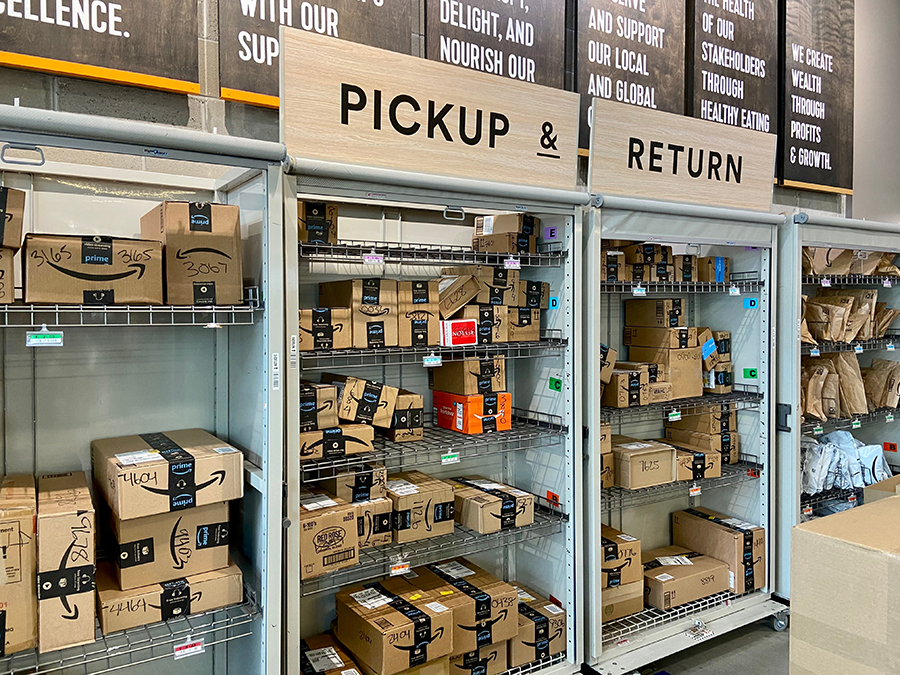
The fee you thought only applied to Apparel and Shoes now applies to your category too - and almost nobody selling on Amazon has updated their cost models to reflect it.
Amazon overhauled FBA Returns Processing Fees in June 2024. Before that change, returns processing fees hit only five categories: Apparel, Watches, Jewelry, Shoes/Handbags/Sunglasses, and Luggage. Today, the fee covers every product category on the platform. If your return rate climbs above a category-specific threshold, Amazon charges you a per-unit fee on every excess return. The thresholds, the rate card, and the calculation method are all different from what most articles (and most seller cost models) still describe.
Here is how it actually works in 2026.
What the Returns Processing Fee Is - and What It’s Not
The FBA Returns Processing Fee is a per-unit charge Amazon deducts from your seller account when a product’s return rate exceeds the threshold for its category. It is separate from your FBA fulfillment fee - it does not equal the fulfillment fee, as the old model did. Amazon now applies a dedicated rate card based on product size tier and shipping weight.
It is not a customer-facing charge: Amazon’s free-return promise to buyers is funded by you, the seller, when your return rate runs high. And it is not the same across all categories - Apparel and Shoes work differently from everything else: those two categories charge on every return, with no threshold at all.
The fee is auto-deducted between the 7th and 15th of the third month following shipment. It appears in your SKU Economics Report in Seller Central.
Which Categories Are Affected and Their Thresholds
Every product category has a threshold. If your return rate for a given month stays below that number, you pay nothing. Exceed it, and you pay the rate-card fee on every unit returned above the threshold.
| Category | Return Rate Threshold |
|---|---|
| Grocery and Gourmet | 2.9% |
| Office Products | 4.4% |
| Toys and Games | 4.7% |
| Everything Else | 4.8% |
| Media (Books, DVD, Music, Software, Video) | 5.1% |
| Fine Art | 5.6% |
| Business, Industrial, and Scientific Supplies | 6.0% |
| Video Games and Gaming Accessories | 6.5% |
| Base Equipment Power Tools | 7.1% |
| Lawn and Garden | 7.7% |
| Home and Kitchen | 8.1% |
| Tires | 8.7% |
| Tools and Home Improvement | 8.7% |
| Sports and Outdoors | 8.7% |
| Electronics Accessories | 8.8% |
| Automotive and Powersports | 9.1% |
| Musical Instruments and AV Production | 9.2% |
| Baby Products | 9.3% |
| Mattresses | 9.3% |
| Lawn Mowers and Snow Throwers | 9.5% |
| Furniture | 9.6% |
| Pet Products | 10.2% |
| Video Game Consoles | 10.7% |
| Jewelry | 10.8% |
| Consumer Electronics | 11.2% |
| Amazon Device Accessories | 11.3% |
| Computers | 11.4% |
| Full-Size Appliances | 11.9% |
| Watches | 12.0% |
| Eyewear | 12.1% |
| Compact Appliances | 12.6% |
| Backpacks, Handbags, and Luggage | 12.8% |
Apparel and Shoes: no threshold. Every return is charged at the rate-card rate, regardless of your return rate. If you sell in these categories, there’s no volume floor below which you’re exempt.
Notice the spread here. Grocery’s threshold is 2.9% - meaning a seller whose return rate climbs to 4% is paying fees on 1.1% of units shipped. A furniture seller at the same 4% return rate pays nothing. Category determines everything.
Fee Rate Card: What You’ll Actually Pay Per Return
You no longer “pay the fulfillment fee again.” As of Jan 15, 2026, the returns fee has its own rate card - here’s what you’ll actually pay per return.
Small Standard Size Tier
| Shipping Weight | Fee per Return |
|---|---|
| 2 oz or less | $1.78 |
| 2+ to 4 oz | $1.84 |
| 4+ to 6 oz | $1.90 |
| 6+ to 8 oz | $1.96 |
| 8+ to 10 oz | $2.02 |
| 10+ to 12 oz | $2.08 |
| 12+ to 14 oz | $2.14 |
| 14+ to 16 oz | $2.21 |
Large Standard Size Tier
| Shipping Weight | Fee per Return |
|---|---|
| 4 oz or less | $2.36 |
| 4+ to 8 oz | $2.70 |
| 8+ to 12 oz | $3.05 |
| 12+ to 16 oz | $3.39 |
| 1+ to 1.25 lb | $3.70 |
| 1.25+ to 1.5 lb | $4.01 |
| 1.5+ to 1.75 lb | $4.32 |
| 1.75+ to 2 lb | $4.63 |
| 3+ lb (first 3 lb) | $5.00 |
| Above 3 lb | +$0.05 per additional 4 oz |
Large Bulky and Extra-Large
| Size Tier | Fee Range |
|---|---|
| Large Bulky | $6.74 to $26.33+ |
| Extra-Large | Ranges up to $157.35, depending on weight |
The fee is now a separate line item with its own rate schedule. A large standard item at 1.5 lbs incurs a $4.32 returns processing fee, regardless of what the FBA fulfillment fee is for that same product.
How Amazon Calculates the Fee (Step-by-Step)
Amazon’s calculation runs on a three-month trailing window:
- Amazon counts all units you shipped in Month 1.
- Returns received during Month 1, Month 2, and Month 3 all count toward Month 1’s return rate.
- Your return rate = (all returns across that 3-month window) / (units shipped in Month 1).
- If the rate exceeds your category threshold, the fee applies.
- Only units returned above the threshold quantity are charged - not all returns.
- The fee per excess return comes from the rate card above, based on size tier and shipping weight.
- The charge hits your account between the 7th and 15th of Month 3.
A concrete example: You sell a home goods item and ship 500 units in January. Over January, February, and March combined, 45 units are returned - a 9% return rate. Home and Kitchen’s threshold is 8.1%. Your excess return rate is 0.9%, meaning 4.5 units above threshold (rounding to 5). At a fee of $1.96 per return (small standard, 7 oz item), you’re charged roughly $9.80 for January’s shipments - billed in mid-March.
At 500 units, it’s ~$9.80 - about $0.02 per unit. At 5,000 units shipped with a 10% overage, it’s ~$980/month, or ~$11,760/year - enough to erase a margin point on a $1M line if you don’t price for it.
Items flagged as damaged due to Amazon operational errors do not count toward your return rate or trigger fees.
Exemptions That Can Zero Out Your Exposure
Three specific situations exempt you from returns processing fees:
Low-volume SKUs: Products shipping fewer than 25 units in a given month are exempt for that month. If you’re testing a new ASIN at low velocity, the fee doesn’t apply until volume picks up.
FBA New Selection Program: For new-to-FBA parent ASINs, the first 20 returned units are fee-waived - provided those returns are received within 180 days of your first inventory receipt.
Amazon errors: Returns resulting from Amazon’s fulfillment mistakes - lost items, incorrectly shipped items, items that arrived damaged through no fault of yours - do not count toward your return rate. Track these through your FBA reimbursements.
None of these help a seller who’s been running an ASIN for years at elevated return rates.
How to Reduce and Manage Returns Processing Fees
This is where sellers leave money on the table.
Before optimizing, review how Amazon handles automatic authorization of return requests and the broader managing returns workflow.
Start with the Returns Insights Dashboard
Seller Central > FBA Returns > Return Insights Dashboard shows your current return rate by ASIN against category thresholds, updated three times per week. Set an internal alert at 80% of your category threshold. That’s your 30-day action window before fees start triggering.
Cross-reference with the SKU Economics Report (Seller Central > Reports > Business Reports) to see actual returns processing fee charges by ASIN. This is the only place that shows what you’re actually being charged per product.
Listing Optimization: The Highest-Leverage Fix
Most returns are preventable. The “item not as described” reason accounts for a disproportionate share of returns across categories - and it’s almost always a listing problem, not a product problem.
Actionable tactics: - Add 10+ lifestyle images showing actual use, scale, and common points of confusion - Include product video where possible - one analysis found video reduces “not as described” returns by 23-31% - Add size charts and dimension callouts for anything where fit or sizing matters, not just apparel - Update your Q&A section monthly using customer service notes - Pull Amazon’s return reason data and map it to specific listing elements
A seller running 500 units/month of a $30 home goods item at an 8% return rate against the 8.1% threshold is one bad month from triggering fees. Drop to 6% and you eliminate the fee - and conversion improves.
Price Absorption: When Prevention Isn’t Enough
For Apparel, Shoes, and other categories where return rates are structurally high, the right answer is sometimes to build the expected fee into your price rather than trying to engineer it away.
The math: You’re selling a small standard item (4 oz) in Apparel. Expected return rate is 12%. Fee per return is $1.84. If you ship 500 units/month, you’re paying 60 returns × $1.84 = $110.40/month in fees - roughly $0.22/unit. A $0.25 price increase covers it with room to spare, and at typical Apparel conversion rates, a 1% price increase rarely moves units meaningfully.
Build it into cost basis. Not doing so is how a returns season quietly erodes a margin point.
Returnless Refunds Don’t Reduce Your Rate
Returnless refunds - where you refund the buyer without requiring the item back - still count as returns in Amazon’s rate calculation. They don’t eliminate your fee exposure. What they do reduce is the operational overhead and any cost of processing a physical return. Useful below $15 for “no longer needed” returns, but don’t mistake it for a fee reduction strategy.
FBA vs. FBM: The 2026 Returns Cost Comparison
Switching high-return ASINs to FBM avoids the FBA Returns Processing Fee - but the math changed significantly in February 2026.
As of February 8, 2026, Amazon eliminated the high-value item exemption from its Amazon Prepaid Return Label (APRL) program. All US seller-fulfilled (FBM) orders now require Amazon-generated prepaid return shipping labels through Buy Shipping Services. High-value sellers who previously managed their own returns - particularly those selling jewelry, electronics, or collectibles - no longer have that option.
The cost structure in 2026:
| Factor | FBA | FBM (post-Feb 2026) |
|---|---|---|
| Returns Processing Fee | Yes (threshold-based) | No |
| Return Shipping Cost | Amazon manages | Seller pays (APRL) |
| Insurance per Return Shipment | Amazon’s liability | $100 cap only |
| Buy Box Advantage | Strong | Weaker |
| Return Process Control | Limited | Guided Returns Workflow available |
Unless your AOV exceeds $50 and your return rate runs 2× your category threshold, stick with FBA - APRL shipping and the $100 insurance cap usually cost more than the returns fee.
One exception worth flagging: if you’re selling high-value items (jewelry, watches, fine art) via FBM, the $100 insurance cap on APRL labels is a serious exposure. A $500 watch returned “damaged” through the prepaid label leaves you with a $400 gap and no recourse through Amazon’s returns merchandise authorization process. For that segment specifically, the FBM cost math is worse now than it was before February 2026, not better.
FAQ
Does the FBA returns processing fee apply to FBM sellers?
No. The FBA Returns Processing Fee applies only to FBA orders. FBM sellers don’t pay this fee - but since February 2026, FBM sellers do pay for prepaid return shipping labels on all seller-fulfilled orders through Amazon’s APRL program. The return costs exist on both sides; they’re just structured differently.
How do I find out if I’m currently being charged returns processing fees?
Check your SKU Economics Report in Seller Central (Reports > Business Reports). It shows returns processing fees charged per ASIN. You can also check the Return Insights Dashboard under FBA Returns to see your current return rate against your category threshold in near-real time.
Are Apparel and Shoes treated differently from other categories?
Yes. Apparel and Shoes are charged a returns processing fee on every return with no threshold. All other categories have thresholds - if your return rate stays below the threshold, you pay nothing. Apparel and Shoes sellers pay regardless of return rate volume.
Can Amazon’s fulfillment errors cause me to pay returns processing fees?
No. Returns resulting from Amazon’s operational errors - lost items, incorrect shipments, items damaged in fulfillment - do not count toward your return rate or trigger returns processing fees. File for FBA reimbursement on those units separately.
What changed about returns processing fees in 2024?
The structure changed fundamentally on June 1, 2024. Before that date, the fee applied only to five categories (Apparel, Watches, Jewelry, Shoes/Handbags/Sunglasses, Luggage) and equaled the full FBA fulfillment fee. After June 1, 2024, the fee expanded to all product categories on a threshold-based model, with fees charged from a separate rate card based on size tier and weight. The 2026 rate schedule reflects adjustments effective January 15, 2026.
Feedvisor’s AI-powered platform tracks unit economics at the ASIN level - including returns processing fee exposure - and reprices automatically to protect margin as return rates shift. If a bad return season is eroding your margin, the fix starts with knowing which ASINs are exposed. See how Feedvisor protects your margin
Your Return Rates Are Costing You More Than You Think