

Categories
Latest Posts



Tags
Advertising Amazon Amazon Advertising Amazon Experts Amazon Listing Optimization Amazon Marketplace Amazon News Amazon Prime Amazon Professional Sellers Summit Amazon Seller amazon sellers Amazon Seller Tips Amazon Seller Tools ASIN Brand Management Brands Buy Box Campaign Manager Consumer Trends COVID-19 downloadable Dynamic Pricing Ecommerce FBA FBM Holiday Season industry news Multi-Channel Fulfillment Optimize pay-per-click Pricing Algorithm Pricing Software Private Label Profits Repricing Repricing Software Revenue Sales Seller Seller-Fulfilled Prime Seller Performance Metrics SEO SKU Sponsored Products Ads Strategy
Get the latest insights right in your inbox
GTINs on Amazon: What They Cost, Why They Get Rejected, and How to Get Them Right
Published: February 27, 2017
Last updated: March 06, 2026

Marissa Incitti
Marissa Incitti leads research and content at Feedvisor focused on Amazon, Walmart, and the broader e-commerce marketplace ecosystem. Her work covers retail media performance, pricing strategy, and how AI-driven discovery is reshaping how brands compete across marketplaces. Prior to Feedvisor, she worked in content leadership roles at a Fortune Global 500 omnichannel commerce technology company.
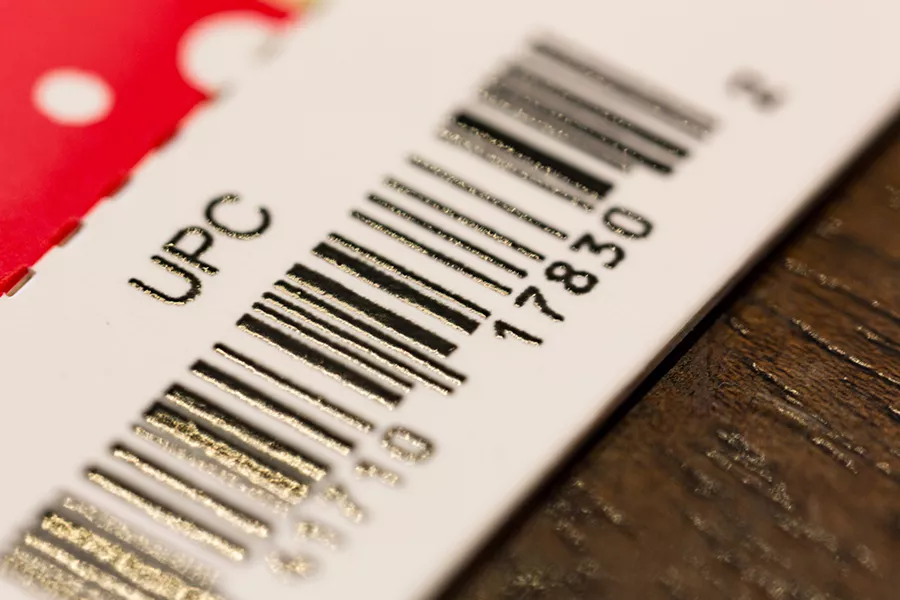
Table of Contents
- The $0.05 Barcode That Costs You Your Listing
- GTIN Types and Where They Apply
- Amazon’s GS1 Verification
- What GS1 Barcodes Actually Cost in 2026
- GTIN Exemptions
- Brand Registry and GTINs: The Misconception That Stalls Listings
- March 2026 FBA Barcode Changes
- Common GTIN Errors and How to Fix Them
- GTINs Across Platforms
- FAQ
The $0.05 Barcode That Costs You Your Listing
Most sellers discover what a GTIN actually is the hard way - when a bulk-resold barcode gets their listing suppressed. A Global Trade Item Number is the numeric code behind the barcode on every product’s packaging. Every sellable unit - individual items, bundles, multi-packs - needs its own.
The definition hasn’t changed in decades. What changed is that Amazon now verifies every GTIN against the GS1 global database. Since 2020, submit a barcode that doesn’t check out and the listing dies on arrival. The era of buying third-party UPCs for a few cents and hoping nobody checks? Over.
GTIN Types and Where They Apply
| Type | Digits | Primary Use |
|---|---|---|
| UPC (Universal Product Code) | 12 | North America - the most common on Amazon.com |
| EAN (International Article Number) | 13 | International / Europe |
| ISBN (International Standard Book Number) | 10 or 13 | Books |
| JAN (Japanese Article Number) | 13 | Japan |
| GTIN-14 | 14 | Cases and bulk packaging |
These are all GTINs - a UPC is the 12-digit version, an EAN the 13-digit version, all managed by GS1. A UPC converts to an EAN by adding a leading zero, and a barcode from any country’s GS1 organization works globally.
One format trap catches sellers constantly: Amazon’s listing form has a “GTIN” field that expects 14 digits. If you have a 12-digit UPC, select “UPC” from the dropdown - not “GTIN.” This mismatch is one of the most common listing errors on the platform.
Amazon’s GS1 Verification
Before 2016, barcode enforcement was minimal - sellers bought bulk UPCs from resellers for pennies and Amazon accepted them. By 2020, that ended. Amazon now cross-references every barcode against the GS1 global database and GTIN.cloud, checking that the Company Prefix matches the brand owner. Recycled barcode, wrong brand name, lapsed GS1 license - the listing gets rejected.
You’ll usually see a suppression first. Fix the identifier and the listing comes back. Ignore repeated flags and Amazon starts pulling related ASINs during audits. Push it further and you’re looking at an account-level suspension. A barcode that worked fine for years can trigger a suppressed listing if an audit catches a GS1 mismatch - and audits hit existing sellers, not just new ones.
What GS1 Barcodes Actually Cost in 2026
Two paths. Which is better depends entirely on how many products you sell.
Single GTINs - $30 each from GS1 US, one-time, no renewal:
| GTINs | Total |
|---|---|
| 1 | $30 |
| 5 | $150 |
| 9 | $270 |
GS1 Company Prefix - annual renewal required:
| Products Covered | Initial Fee | Annual Renewal |
|---|---|---|
| Up to 10 | $250 | $50 |
| Up to 100 | $750 | $150 |
| Up to 1,000 | $2,500 | $500 |
| Up to 10,000 | $6,500 | $1,300 |
Here’s the math most articles get wrong: for 1-9 products, individual GTINs are always cheaper. Nine singles cost $270 total with no ongoing fees. A prefix costs $250 up front plus $50 every year - $300 in year one, $350 cumulative by year two. The prefix never catches up on pure cost because singles have zero renewal.
But you can only buy up to 10 single GTINs. If you expect to cross that threshold - and most growing brands do - a prefix is the only option. The real question isn’t which is cheaper at 9 products. It’s whether you’ll still have 9 products a year from now, or 15.
Don’t miss the renewal. Company Prefix licenses must be renewed annually. Let it lapse and you lose the prefix plus every GTIN tied to it. Renewal is exactly 20% of the initial fee at every tier.
GS1 US’s official direct price is $30 per single GTIN. Some third-party ordering services add service fees. Buy direct from gs1us.org.
Managing hundreds of SKUs with complex pricing? Feedvisor’s AI-powered platform handles repricing and advertising optimization across your entire catalog - so you can focus on getting your product identification right. See how it works.
GTIN Exemptions
If your product ships without a manufacturer barcode - handmade, custom, private label, unbranded - request a GTIN exemption in Seller Central:
- Go to Catalog > Add Products
- Select “I’m adding a product not sold on Amazon”
- Enter your brand name (or “Generic” for unbranded)
- Check “This product does not have a Product ID”
- Submit - Amazon typically responds within 48 hours
Valid for products that genuinely lack barcodes. But Amazon has been tightening exemption approvals, and whether they’ll tighten further is anyone’s guess - the trend is clear. For adding product identifiers long-term, a $30 GS1 barcode is cheap insurance against a policy shift.
Brand Registry and GTINs: The Misconception That Stalls Listings
“I’m enrolled in Brand Registry, so I don’t need GTINs.”
Wrong. Brand Registry does not waive the GTIN requirement. You still need valid product identifiers to create listings in most categories.
What Brand Registry actually does is simplify the GTIN exemption process. Your brand is already verified through trademark enrollment, so Amazon skips the manual brand approval step. You go directly to applying for an exemption without extra documentation.
The catch: your GS1 Company Prefix and your Brand Registry enrollment should be tied to the same entity. If the brand name in GS1’s database doesn’t match your Brand Registry trademark exactly - different spelling, different company name - you’ll hit error code 5461 and the listing goes nowhere. Getting this alignment right when managing a listing saves hours of support tickets.
| Scenario | Recommendation |
|---|---|
| Private label, few products, Amazon-only | GTIN exemption may suffice |
| Multi-channel (Amazon + Walmart + retail) | GS1 GTINs required |
| Growing brand planning retail expansion | Invest in a GS1 Company Prefix now |
| Reselling branded products | Use the manufacturer’s existing GTIN |
March 2026 FBA Barcode Changes
On March 31, 2026, Amazon is eliminating commingled inventory. This directly changes how GTINs function in FBA.
Brand owners enrolled in Brand Registry with a “Brand Representative” role can now use manufacturer barcodes - their GS1 GTINs printed on packaging - as the primary tracking identifier. No more printing FNSKU stickers. The industry was spending roughly $600 million annually on re-stickering just to avoid commingling. That expense is gone for qualifying brand owners. Whether Amazon’s virtual tracking will work as smoothly as promised remains to be seen - early reports are positive, but edge cases around multi-pack variations are still surfacing.
Resellers face the opposite. FNSKU labels are now mandatory on all inventory - no exceptions. Inventory received after March 31 without a proper FNSKU gets classified as defective. Amazon’s FBA Prep and Labeling Service ended January 1, 2026, so labeling is on you. Budget $0.10-$0.55 per unit for third-party prep.
For brand owners, valid GS1-registered barcodes matter more than ever. Your manufacturer barcode is now the primary identifier Amazon uses for fulfillment.
Common GTIN Errors and How to Fix Them
When a GTIN error stops your listing, start at gepir.gs1.org. If the barcode isn’t in the database, it’s invalid - no support ticket fixes that. For help locating product identifiers on packaging, check above or below the barcode lines.
You just uploaded 200 SKUs and half came back with error 5461 - “product identifiers do not match.” This is a brand-name mismatch. Your Seller Central account says “XYZ Brand” but GS1 has “XYZ Brand LLC.” Check spelling, spacing, and capitalization at gepir.gs1.org. They must be identical.
Error 5665 is simpler: the brand hasn’t been approved. Enroll in Brand Registry (requires a trademark) or enter “Generic” for unbranded products and apply for a GTIN exemption.
For error 8572, the GTIN you entered doesn’t match the ASIN Amazon has on file. This happens constantly with third-party resold barcodes where the data has been recycled. The fix is a legitimate GS1 barcode - there’s no shortcut. Contact Seller Support with your GS1 certificate if you’re the rightful owner.
The vaguest one - “invalid product identifier” with no error code - means the barcode isn’t in GS1’s database at all. If you bought it from a third-party reseller, there’s your answer. Replace it: $30 from GS1 US.
Most of these share a root cause: buying from the wrong source. Start with GS1 directly, match your brand name exactly across systems, and select “UPC” (not “GTIN”) for 12-digit codes in the SKU and product identifier fields.
GTINs Across Platforms
A single GS1-issued GTIN works everywhere. But enforcement varies.
| Platform | GTIN Required? | Verification | Exemption? |
|---|---|---|---|
| Amazon | Yes (most categories) | GS1 database - strictest | Yes (Seller Central) |
| Walmart | Yes (all items) | Strict; invalid IDs removed | Yes (private label/handmade) |
| Google Shopping | Yes (branded products) | Cross-references GS1 | identifier_exists=false |
| eBay | Most branded items | Moderate; MPN accepted | Used/vintage exempt |
| Shopify | Optional (storefront) | None on storefront | N/A |
Buy once, use everywhere. A GS1 GTIN that clears Amazon’s verification will clear Walmart and Google - that $30 isn’t just an Amazon expense, it’s your multi-channel ID.
FAQ
Do I need a GTIN to sell on Amazon?
Yes, for most categories. If your product genuinely doesn’t have one - private label, handmade, or unbranded - you can apply for a GTIN exemption, but approval standards have tightened.
Can I use cheap UPCs from third-party resellers?
Amazon verifies all barcodes against the GS1 global database. Third-party resold UPCs fail verification, resulting in listing suppression. Buy directly from GS1 US at $30 per GTIN with no annual renewal.
What’s the difference between a GTIN, UPC, EAN, and FNSKU?
GTIN is the umbrella term. UPC (12 digits) and EAN (13 digits) are specific GTIN formats used across all retailers. FNSKU is Amazon’s internal barcode tying a product to a specific seller’s FBA inventory - it’s not a universal product identifier.
Does Brand Registry eliminate the GTIN requirement?
No. Brand Registry simplifies the GTIN exemption application but does not waive the requirement itself.
Should I buy single GTINs or a Company Prefix?
For 1-9 products with no expansion plans, singles at $30 each are cheaper - no renewal fees ever. If you expect more than 10 products, a Company Prefix ($250 + $50/year for up to 10) is the only option and scales as you grow. Most brands outgrow singles within a year.
Stop Losing Listings to Barcode Errors