

Categories
Latest Posts



Tags
Advertising Amazon Amazon Advertising Amazon Experts Amazon Listing Optimization Amazon Marketplace Amazon News Amazon Prime Amazon Professional Sellers Summit Amazon Seller amazon sellers Amazon Seller Tips Amazon Seller Tools ASIN Brand Management Brands Buy Box Campaign Manager Consumer Trends COVID-19 downloadable Dynamic Pricing Ecommerce FBA FBM Holiday Season industry news Multi-Channel Fulfillment Optimize pay-per-click Pricing Algorithm Pricing Software Private Label Profits Repricing Repricing Software Revenue Sales Seller Seller-Fulfilled Prime Seller Performance Metrics SEO SKU Sponsored Products Ads Strategy
Get the latest insights right in your inbox
Seller Fulfilled Prime (SFP): Requirements, Costs, and Whether It’s Worth It in 2026
Published: June 11, 2018
Last updated: February 24, 2026

Marissa Incitti
Marissa Incitti leads research and content at Feedvisor focused on Amazon, Walmart, and the broader e-commerce marketplace ecosystem. Her work covers retail media performance, pricing strategy, and how AI-driven discovery is reshaping how brands compete across marketplaces. Prior to Feedvisor, she worked in content leadership roles at a Fortune Global 500 omnichannel commerce technology company.
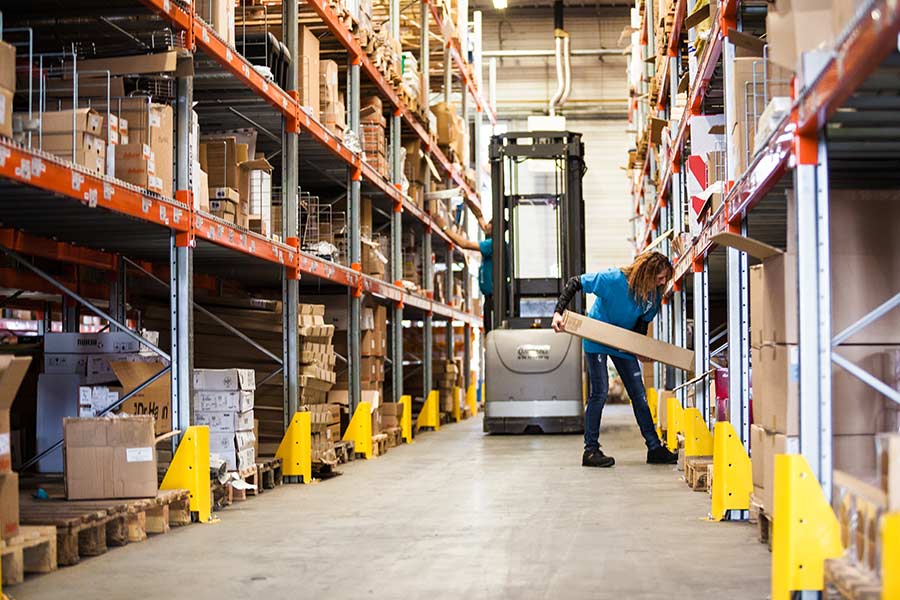
Most sellers look at Seller Fulfilled Prime and see the Prime badge. What they should see is an operational commitment that only pays off under specific conditions. SFP lets you display the Prime badge on orders you fulfill yourself - from your own warehouse or a 3PL - while keeping inventory off Amazon’s shelves. That sounds like the best of both worlds until you check the performance thresholds, shipping costs, and the fact that Amazon will pull the badge the moment your metrics slip.
The question isn’t whether SFP is good. It’s whether the math works for your catalog and shipping footprint.
What SFP Actually Gets You
The Prime badge is the entire value proposition. Amazon reports that listings gaining Prime eligibility through SFP for the first time see an average sales uplift of more than 50%. Conversion rates typically climb 20-25% over non-Prime listings, and some sellers have reported even larger jumps after enabling SFP - conversions more than doubling while advertising costs dropped by half or more.
With 200 million US Prime members as of late 2025 - spending roughly twice what non-Prime shoppers spend annually - the audience is real. But the Prime badge isn’t a participation trophy. It’s a performance contract.
SFP sellers get near-FBA-level Buy Box competitiveness. The claim that SFP delivers “the same Buy Box privileges as FBA” is an oversimplification - FBA retains a slight algorithmic edge at equal pricing. But SFP puts you dramatically ahead of standard FBM sellers, and price plus seller metrics still outweigh fulfillment method in most Buy Box decisions.
You need a Professional seller account, a domestic US shipping address, and the operational capacity for what follows.
The Performance Bar You Need to Clear
Amazon measures SFP sellers on a weekly cycle (Sunday through Saturday) against these thresholds:
| Metric | Threshold |
|---|---|
| On-time delivery rate | 93.5% minimum |
| Valid tracking rate | 99% |
| Seller-initiated cancellation rate | Below 0.5% |
| Monthly SFP volume | 100+ packages, spread throughout the month |
You also need delivery speed coverage: at least 30% of Prime customer page views for standard-size items must show one-day delivery, and 70% must show two-day. Oversize items get lower thresholds (roughly 10% one-day, 45% two-day).
On top of that: free one-day and two-day delivery for Prime customers, free nationwide standard shipping for all customers, free returns on items under 50 lbs, Saturday delivery (six-day operations, Monday through Saturday), and zero-day handling time - ship before 2:00 PM weekdays, 10:30 AM on Saturdays. Amazon handles all post-order customer service.
The standard is strict enough to filter out sellers who aren’t running a serious fulfillment operation. That’s the point.
SFP Trial Period: How to Get In
Before you enter the trial, you need to meet pre-qualification metrics over the past 90 days: at least 100 self-fulfilled deliveries, cancellation rate below 2.5%, valid tracking rate above 95%, and late shipment rate under 4%. These are looser than the ongoing SFP metrics - the real test comes during the trial.
The trial itself runs 30 days. You must ship at least 100 Prime trial packages while maintaining 93.5% on-time delivery, 99% valid tracking, and below 0.5% cancellation rate. The Prime badge does not display during the trial, but you still must operate at zero-day handling time.
Three things sellers get wrong about the trial. First, you only get three attempts per calendar year (as of June 2025). Fail three times and you’re locked out until next year. Second, graduation freezes near major sales events - Amazon blocks trial completions during the 30 days before Prime Day and the Black Friday-through-Christmas window. For 2025, the latest safe trial start was September 15; 2026 dates haven’t been announced. Third, 100 packages is the minimum, not a shortcut. Even if you hit 100 in week one, you still serve the full 30-day evaluation. Amazon notifies you two days before graduation.
SFP vs FBA: Where the Cost Math Changes
SFP eliminates FBA fulfillment fees, storage fees, and inbound placement fees. You pick up shipping costs, warehouse operations, and potentially a 2% per-item SFP fee (minimum $0.25/unit) on Prime sales - though this fee isn’t prominently listed by Amazon, so verify in Seller Central.
For a standard 1-2 lb product as of early 2026:
| Cost Component | FBA | SFP |
|---|---|---|
| Fulfillment fee | $4.50-$5.50/unit | $0 |
| Storage (monthly) | $0.78-$2.40/cu ft | Your warehouse cost |
| Inbound placement | ~$0.62/unit | $0 |
| Shipping to customer | $0 (included) | $4-$7 ground; $15-$25 air |
| SFP fee | N/A | Possibly 2% of item price |
The general rule: if you can fulfill and ship a unit for under roughly $4.00, SFP is cheaper than FBA for small standard-size products. For a $25 product, FBA’s all-in cost runs $6-$7 per unit (fulfillment fee + placement + storage). Ship that same product via USPS Priority Mail within your ground zone for $4-$6 and you’re ahead - before factoring in storage savings. Use the Amazon FBA Calculator to get exact per-ASIN FBA costs before comparing.
The advantage widens for bulky items, where FBA fees hit $9-$20+ per unit. A product costing $15 via FBA might cost $5-$8 to ship yourself.
It also compounds for slow-moving inventory. FBA’s aged inventory surcharges kick in at 181 days and escalate at 271 and 365 days. Your own warehouse doesn’t penalize you for keeping stock.
The Shipping Strategy That Makes or Breaks SFP
Carrier choice matters more than most sellers realize, especially because of the Saturday delivery mandate. USPS charges no Saturday surcharge. UPS and FedEx add $8-$16 per package. If a meaningful portion of your orders ship Saturdays, that gap alone can flip the economics.
Use a hybrid template approach:
- National Prime templates for high-margin SKUs. Mix ground and air to cover the full country within two-day windows.
- Regional Prime templates for low-margin items. Drill down to specific states, metro areas, even subsections of states in Seller Central.
The delivery speed requirements push you toward multi-warehouse distribution. Two or three strategically placed warehouses let ground shipping reach 70-90% of the US within two days. That’s $4-$6 ground versus $15-$25 express.
Amazon Buy Shipping provides OTDR Protection: use Shipping Settings Automation with OTDR Protected labels and late deliveries from carrier or weather disruptions won’t count against your on-time rate. That alone justifies Buy Shipping even if you have better rates elsewhere.
One underused feature: Prime order throttling. Cap daily Prime volume at, say, 100 orders - listings revert to standard 3-5 day templates past the cap. Useful for ramping up gradually.
Optimizing your pricing strategy is critical when running SFP. Margins shift with every carrier rate change and FBA fee update. Feedvisor’s AI-driven pricing platform processes real-time data to keep your prices competitive and your margins protected - whether you’re fulfilling via FBA, SFP, or both.
What Changed in 2025-2026
The June 2025 updates reshaped SFP significantly. The headline changes:
The three-strike policy replaced immediate suspensions. First miss on a given metric: warning email. Second: Prime offers disabled. Third: enrollment revoked. Four consecutive clean weeks clear infractions. Strikes are tracked per metric, not cumulative - one strike on delivery rate and one on tracking don’t compound. And if you receive a second warning, you can voluntarily keep Prime offers paused while you fix the underlying issue, buying time without risking a third strike.
The OTDR threshold dropped from 97% to 93.5%. This is seller-friendly. The old 97% bar was punishing during peak seasons.
The appeals process got formalized. You have 14 calendar days to appeal, with a maximum of three appeals per quarter. You need specific documentation: order IDs, tracking numbers, carrier delay proof. Generic appeals get denied.
In early 2026, FBA fulfillment fees increased an average of $0.08 per unit, and Amazon eliminated FBA prep services entirely. Both nudge the cost comparison further toward SFP for sellers with established operations.
The February 2026 prepaid return label mandate requires all seller-fulfilled orders (including SFP) to use Amazon’s prepaid labels - the high-value item exemption was eliminated. Return shipping costs hit the seller based on return reason. You now get 4 calendar days to process refunds after receiving returns, up from 2 business days.
When SFP Doesn’t Make Sense
SFP is the wrong move if your products are under $15-$20. Shipping costs eat margins on low-priced items. At a $15 selling price with a 15% referral fee, $2.25 goes to Amazon before you ship anything. Add $5-$7 in shipping and your margin evaporates.
It also fails if you can’t hit 100 Prime packages per month consistently - drop below and Amazon caps your daily Prime volume. Sellers without existing fulfillment infrastructure should think twice as well. Building a warehouse operation from scratch to run SFP almost never pencils out. The program rewards sellers who already have the operational muscle.
And if your catalog requires nationwide two-day air shipping - heavy, low-margin products with customers spread across all zones - air shipping will destroy the cost advantage.
The sweet spot for SFP: bulky or oversize items where FBA fees are highest, high-value products where you want inventory control, slow-moving ASINs that rack up long-term storage fees in FBA, seasonal products, personalized items, and anything restricted from FBA like certain hazmat products. If your catalog hits two or more of those categories, compare your options and run the numbers.
FAQ
Is Seller Fulfilled Prime the same as FBA for Buy Box purposes?
Close, but not identical. SFP with an active Prime badge puts you near FBA-level competitiveness for the Buy Box, and well ahead of standard FBM. However, FBA may retain a slight algorithmic edge in head-to-head competition at equal pricing. Price and seller metrics still outweigh fulfillment method in most Buy Box decisions.
How much does SFP cost compared to FBA?
SFP eliminates FBA’s fulfillment fee ($3.50-$8.00+/unit), storage fees, and placement fees. You replace them with shipping ($4-$7 ground, $15-$25 air) and warehouse costs. If all-in fulfillment is under $4.00 per unit, SFP typically saves money. For oversize items, savings reach 40-60%.
What happens if I fail the SFP trial?
You can retry, but you’re limited to three attempts per calendar year as of June 2025. Failed attempts count toward this limit, and you must re-qualify before each attempt. Fail all three and you wait until the next calendar year.
Can I use SFP and FBA at the same time?
Yes. Many sellers run a hybrid strategy - FBA for fast-moving small items and SFP for oversize, slow-moving, or high-value products. This lets you optimize costs across your catalog while maintaining Prime eligibility on everything.
What carriers can I use for SFP?
Amazon-approved carriers only: USPS, UPS, FedEx, DHL, and regional carriers like OnTrac and LaserShip. Amazon strongly encourages Buy Shipping for OTDR Protection. You can link your own negotiated carrier accounts through Buy Shipping to keep volume discounts.
Your Fulfillment Strategy Is Costing You More Than It Should