

Categories
Latest Posts



Tags
Advertising Amazon Amazon Advertising Amazon Experts Amazon Listing Optimization Amazon Marketplace Amazon News Amazon Prime Amazon Professional Sellers Summit Amazon Seller amazon sellers Amazon Seller Tips Amazon Seller Tools ASIN Brand Management Brands Buy Box Campaign Manager Consumer Trends COVID-19 downloadable Dynamic Pricing Ecommerce FBA FBM Holiday Season industry news Multi-Channel Fulfillment Optimize pay-per-click Pricing Algorithm Pricing Software Private Label Profits Repricing Repricing Software Revenue Sales Seller Seller-Fulfilled Prime Seller Performance Metrics SEO SKU Sponsored Products Ads Strategy
Get the latest insights right in your inbox

Marissa Incitti
Marissa Incitti leads research and content at Feedvisor focused on Amazon, Walmart, and the broader e-commerce marketplace ecosystem. Her work covers retail media performance, pricing strategy, and how AI-driven discovery is reshaping how brands compete across marketplaces. Prior to Feedvisor, she worked in content leadership roles at a Fortune Global 500 omnichannel commerce technology company.
Amazon Product Authentication: A Seller’s Guide to Transparency, Project Zero, and Collectibles Grading
Published: February 27, 2017
Last updated: May 13, 2026
Product authentication on Amazon refers to the process of verifying that items sold on the marketplace are genuine - not counterfeit, mislabeled, or misrepresented. Amazon now operates a layered anti-counterfeiting system that includes unit-level serialization (Transparency), automated counterfeit removal (Project Zero), and category-specific grading requirements for collectibles like coins and comics.
Most sellers searching “Amazon product authentication” are thinking about coins and comics - and about a 10% discount on NGC and CGC grading through an Amazon partnership that ended with Amazon Auctions in the early 2000s. What replaced it for brand owners is more powerful. What applies to collectibles sellers is more nuanced than a simple discount.
Table of Contents
- The Modern Authentication Stack
- Amazon Transparency: Unit-Level Verification
- Project Zero: Self-Service Counterfeit Removal
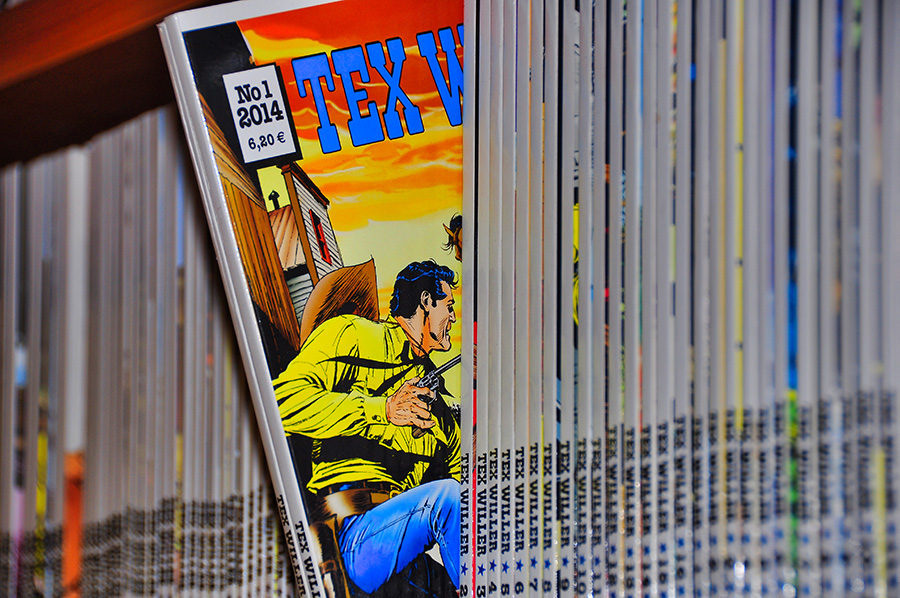
- Authenticating Collectibles: Coins and Comics
- Which Program Do You Actually Need?
- FAQ
The Modern Authentication Stack
Brand Registry is the gate, Transparency is the lock, and Project Zero is what you do when someone finds a way through anyway. That three-layer picture didn’t exist a decade ago - Amazon’s anti-counterfeiting infrastructure has been built largely since 2017, and it’s still evolving.
Amazon invested over $1 billion in brand protection in 2025 alone, with automated systems now blocking over 99% of counterfeit listings before brands detect them. In 2025, Amazon seized more than 15 million counterfeit products globally and has pursued 24,000+ bad actors through civil litigation and criminal referrals since its Counterfeit Crimes Unit launched in 2020.
The programs function as a sequence: Brand Registry establishes your legal authority, Transparency stops unauthorized stock before it ships, and Project Zero clears infringing listings once they appear. You can use each independently, but the full stack is where real protection lives.
Amazon Transparency: Unit-Level Verification
Most brand owners enroll in Transparency to fight counterfeits. The ones who get the most out of it are fighting listing hijackers - authorized resellers gone rogue, competitors piggybacking on your ASIN, gray-market importers. The counterfeit protection is real. The hijacker defense is what actually moves the needle for most catalogs.
Amazon Transparency is a product serialization service that assigns a unique, scannable code to every unit you manufacture. When a unit arrives at a fulfillment center - or when a seller-fulfilled order is confirmed - Amazon scans the code. No valid code, no shipment.
In practice, label misprints, kitting mix-ups, and multi-warehouse receiving errors all create edge cases you’ll need a short operational playbook for. The mechanism is clean; the execution requires attention.
How it works
You have three implementation paths. Amazon-issued codes come with customer engagement features (post-purchase scanning via the Amazon Shopping app). Designed-in codes go into packaging at the print stage. The third path - added via Transparency Interoperability in 2025 - connects your existing serial numbers without changing packaging, which significantly lowers the barrier for brands already running serialization for warranty or quality tracking.
Before protections activate, Amazon runs an operational review requiring 98% code accuracy across scanned units. After that, every unit needs a valid code - FBA and FBM both.
What Transparency costs
Enrollment is free. The only cost is the codes themselves: $0.01-$0.05 per unit, with volume discounts. For 10,000 units, you’re looking at $100-$500 in code costs - plus labeling labor or printing integration. No subscription fees, no minimums.
At those numbers, the cost argument rarely holds. The real barrier is operational: every manufactured unit needs a code, not just Amazon-bound inventory. High-SKU catalogs with short production runs can find tracking overhead outpaces the counterfeit risk. Worth calculating before you commit - most mid-catalog brands with genuine hijacking exposure find it’s worth it.
Who should enroll
Transparency is built for brand owners and manufacturers, not resellers. Requirements: an active Amazon Brand Registry account (registered trademark required), a valid GTIN - UPC or EAN - per product, and the ability to apply unique codes to every manufactured unit.
As of early 2026, 88,000+ brands have enrolled and 2.5 billion+ units have been verified across 10 countries.
Why Transparency beats most other hijacker defenses
Once Transparency is active on an ASIN, no unauthorized seller can list or ship units without valid codes - codes they can only source from you. That structural constraint makes Transparency categorically different from price-based hijacker defenses or test-buy-and-report strategies. If listing hijacking is costing you Buy Box share, this is where to start.
Protect your catalog from hijackers and counterfeits. Feedvisor helps brand owners monitor listing integrity while optimizing pricing and advertising. See how Feedvisor works
Project Zero: Self-Service Counterfeit Removal
48 hours is a long time for a counterfeit listing to stay live. In supplements, electronics, or beauty, a single bad actor on your ASIN can generate a wave of negative reviews that outlast the listing itself. Project Zero exists to close that window: enrolled brands remove counterfeit listings on the spot, skipping Amazon’s investigation queue entirely. No complaint filed. No waiting.
The enrollment bar is high because the power is real. You need active Brand Registry, a demonstrated history of accurate counterfeit removal submissions, and Amazon’s required training. The accuracy threshold is 90%+ to get in, 99%+ to stay. If your accuracy drops, access gets pulled - Amazon monitors continuously. Brands that have used the standard Report a Violation tool and built a clean track record there are the natural candidates.
25,000+ brands are enrolled as of 2025. Amazon’s machine learning blocks over 99% of counterfeits before brands even report them; Project Zero handles the remainder. The combination is powerful. But if you’re just starting out, the more impactful first step is Brand Registry and Transparency - Project Zero is the layer you add once you’re already protected everywhere else.
Authenticating Collectibles: Coins and Comics
Coin and comic sellers are playing a different game. Brand Registry, Transparency, and Project Zero are all irrelevant to you - Amazon doesn’t care that you own the rights to a 1952 Mickey Mantle card. What matters is whether the item is genuine and accurately graded, and Amazon enforces that through category-specific policy, not brand protection programs.
Coins: NGC and PCGS are the standard
The $1,500 threshold is the rule that matters most. Coins priced at or above that require professional third-party grading - period, not optional. Approved services are NGC (Numismatic Guaranty Corporation) and PCGS (Professional Coin Grading Service), plus CAC verification. Gold coins get professional grading recommended regardless of price.
Coins graded by services not on that list must be removed from their slabs and listed as “Graded by Seller.” Your overall inventory mix matters too: 70% or more must be NGC/PCGS graded or sourced from a legally recognized government mint.
NGC’s 2025 grading fees run approximately $22-$23 per coin for economy service (coins under $300, 70-day turnaround) and approximately $40 per coin for standard service (coins up to $3,000, 16-35 day turnaround). Fast Track cuts turnaround roughly in half for an extra $15 per coin. A $10 handling fee applies per submission.
Don’t price grading as a line item - price it as a capital efficiency problem. An NGC standard submission for 50 coins runs about $2,010 ($40 × 50 + $10 handling), with capital locked up for 35 days before you can list. On thin-margin coins, that holding time plus grading fee can turn a profitable buy into a wash. Build the turnaround into your acquisition math, not just the fee.
The Amazon-CCG partnership from 1999 offered a 10% discount through Amazon Auctions. That program no longer exists - current rates are standard commercial rates directly from each service.
Comics: CGC dominates, PSA is entering
CGC (Certified Guaranty Company) is the standard for comics on Amazon. Premium listings require slabbed, authenticated books with certification numbers documented in the listing. Current fee schedule:
| Service | Min. Quantity | Fee/Comic | Turnaround |
|---|---|---|---|
| Modern Bulk (1975-present) | 25 | $27 | 45 days |
| Modern | 1 | $30 | 45 days |
| Vintage Bulk (pre-1975) | 25 | $42 | 45 days |
| Vintage | 1 | $45 | 45 days |
| High Value (up to $1,000 FMV) | 1 | $105 | 10 days |
| Unlimited Value | 1 | 4% FMV ($135 min) | 5 days |
Fast Track adds $15 per item. CGC membership discounts: Associate/Premium members save 10%; Elite members save 20%.
PSA announced in 2025 that it’s entering the comic grading market, historically CGC’s exclusive domain. If CGC’s 45-day turnaround has been a constraint, PSA’s entry is worth watching.
Which Program Do You Actually Need?
Brand Registry first. Always. Everything else is built on top of it.
If you’re a brand owner or manufacturer: Once Brand Registry is in place, Transparency is worth it for any catalog where hijacking has appeared - or where it’s common in your category (supplements, electronics accessories, beauty). Code cost is trivial at $0.01-$0.05 per unit. Project Zero comes next, once you have a clean Brand Registry history and high-stakes listings where uptime directly affects revenue.
If you’re a reseller selling coins or comics: Category policy, not brand protection programs. The $1,500 threshold and NGC/PCGS requirements govern your business. Build grading costs and turnaround into your acquisition math before buying. Create a listing only after certification is complete.
If you’re a standard products reseller: Brand Registry requires trademark ownership - Transparency and Project Zero are off the table. Your protection tools are Amazon’s standard Seller Protection policies and reporting mechanisms. If hijacking is frequent, the real answer is trademarking your brand or sourcing from brands that use Transparency.
FAQ
What is Amazon Transparency and how does it protect sellers? Amazon Transparency assigns a unique serialization code to every manufactured unit. Amazon scans these codes at fulfillment and blocks any unit without a valid code. Because valid codes can only come from the brand owner, unauthorized sellers can’t list or ship your products - making it one of the most structurally effective defenses against listing hijacking.
Is the Amazon-NGC/CGC 10% discount still available? No. That partnership dates to Amazon Auctions in 1999 and is gone. Coin and comic sellers pay standard commercial rates directly to NGC, PCGS, or CGC - no Amazon-brokered discount exists today.
Do I need to authenticate every product I sell on Amazon? Not universally. Brand owners can optionally enroll in Transparency. Collectibles sellers face category-specific requirements - coins priced at $1,500+ require NGC or PCGS grading. Standard commodity products have no authentication requirement beyond normal policy compliance.
What’s the difference between Amazon Transparency and Project Zero? Transparency blocks bad inventory before it ships; Project Zero removes bad listings after they appear. Transparency operates at the unit level - a counterfeit unit without a valid code can’t enter fulfillment. Project Zero operates at the listing level - enrolled brands immediately remove infringing ASINs without waiting for Amazon’s review. Most brand owners in high-risk categories use both.
How much does it cost to enroll in Amazon Transparency? Enrollment is free. Codes cost $0.01-$0.05 per unit depending on volume - no subscription fees, no minimums. Additional costs: labeling labor and any printing integration you need at scale.
Request Feedvisor 360 Demo